

The Environment in Brexit Britain
On Tuesday 21st March Green Schools Project hosted its first ever public event at Impact Hub Kings Cross. It highlighted the impact of Brexit on the environment and was organised to coincide with the imminent triggering of article 50 by Prime Minister Theresa May.
The event featured high-profile figures who discussed the so-far barely mentioned implications on the environment of the UK’s departure from the European Union.
The panellists were:
- Tom Brake, Liberal Democrat MP for Carshalton and Wallington
- James Murray, Editor in chief, Business Green
- Sam Lowe, Campaign Lead, Friends of the Earth
- Amy Mount, Head of Greener UK unit, Green Alliance
- Max Wakefield, Lead Campaigner, 10:10
- Esther Obiri-Darko, Green Party spokesperson for Science and Technology.

Tom Brake MP said: “The UK’s departure from the EU must be used as an opportunity to bolster not trash environmental legislation. MPs will need to go through the Grand Repeal Bill with a fine tooth comb to ensure this is the case.”
James Murray, editor in chief of Business Green said “This event raised the important issue of the environment in the Brexit negotiations, as the current 12 point plan published by the Government doesn’t make a single mention of environmental issues.
“It is completely up in the air whether regulations that have led to ambitious targets on greenhouse gas reductions, cleaner beaches and protected habitats will remain in place. I encourage everyone to urge politicians to make the environment a key issue in these negotiations.”
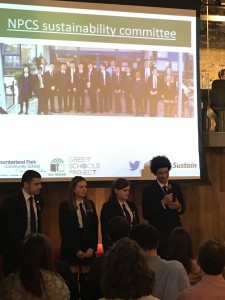
We brought the voice of youth into the debate by showcasing the work carried out by students at Northumberland Park Community School in Tottenham. One of Green Schools Project’s original partner schools, they formed a sustainability committee and have introduced a new recycling system. This has led to a big increase in recycling around the school and is encouraging students to take this behaviour home.
They also made a petition to demonstrate the support for banning polystyrene cups in the staff room leading to a big reduction in plastic waste.
The panellists all provided actions for the audience to take away to influence the issues discussed. Actions included Amy Mount’s suggestion to write their MP asking them to sign the Greener UK MPs’ pledge for the environment, and Esther Obiri Darko’s to write to their council and pension fund asking them to divest from fossil fuels. See the full list of actions that were suggested to support the environment in these uncertain times.
A receptive audience left eager to take on some of these actions in the hope of raising this issue up the agenda of government during the 2 year Brexit negotiating process. Attendees were also encouraged to find schools and teachers that would like to follow the example of Northumberland Park School and promote environmental education by telling them about Green Schools Project.
Pingback: The Environment in Brexit Britain Videos | Green Schools Project
Pingback: Sam Lowe, Campaign Lead, Friends of the Earth - Brexit, Trade and the Environment | Green Schools Project
Pingback: Max Wakefield, Lead Campaigner, 10:10 - Brexit and Climate Change | Green Schools Project
Pingback: Tom Brake MP, Liberal Democrats - Brexit and the parliamentary process | Green Schools Project
Pingback: James Murray, Editor in Chief, Business Green - Green Brexit: The good, the bad, the ugly and the very ugly | Green Schools Project
Pingback: Amy Mount, Head of Greener UK Uniti, Green Alliance - The implementation of environmental policy after Brexit | Green Schools Project
Pingback: Esther Obiri-Darko, Green Party - Environmental Education in Brexit Britain | Green Schools Project